

 https://www.innews.media/uploads/news/2026-06/_innews_c943aa991ca906bd158c79c57_o.jpg
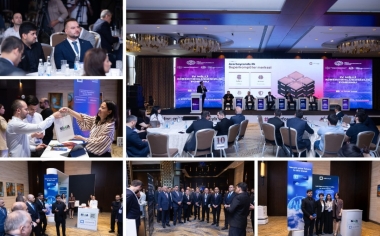
The High-Level Energy and Urban Dialogue of the Developing-8 Organization for Economic Cooperation (D-8), titled “Powering Sustainable Cities in the D-8 Region: Aligning Energy Transitions with Urban Development Agendas”, was held on 19 May 2026 at the Azerbaijan Pavilion on the sidelines of the 13th session of the World Urban Forum (WUF13) in Baku.
The event brought together Ministers, Deputy Ministers, senior government officials, mayors, international experts, and representatives of international organizations from all eight D-8 Member States, reflecting the Organization’s growing role as a platform for advancing coordinated responses to urbanization, climate, energy and sustainable development challenges across the Global South.
In line with the theme of WUF13, “Housing the World: Safe and Resilient Cities and Communities”, the Dialogue served as a continuation of the D-8 High-Level Climate and Urban Dialogue held during D-8 Week 2025 in Baku and formed part of broader efforts aimed at strengthening cooperation among D-8 Member States in the fields of sustainable urbanization, energy transition, climate resilience and inclusive economic development, in line with the priorities of the D-8 Decennial Roadmap (2020–2030).
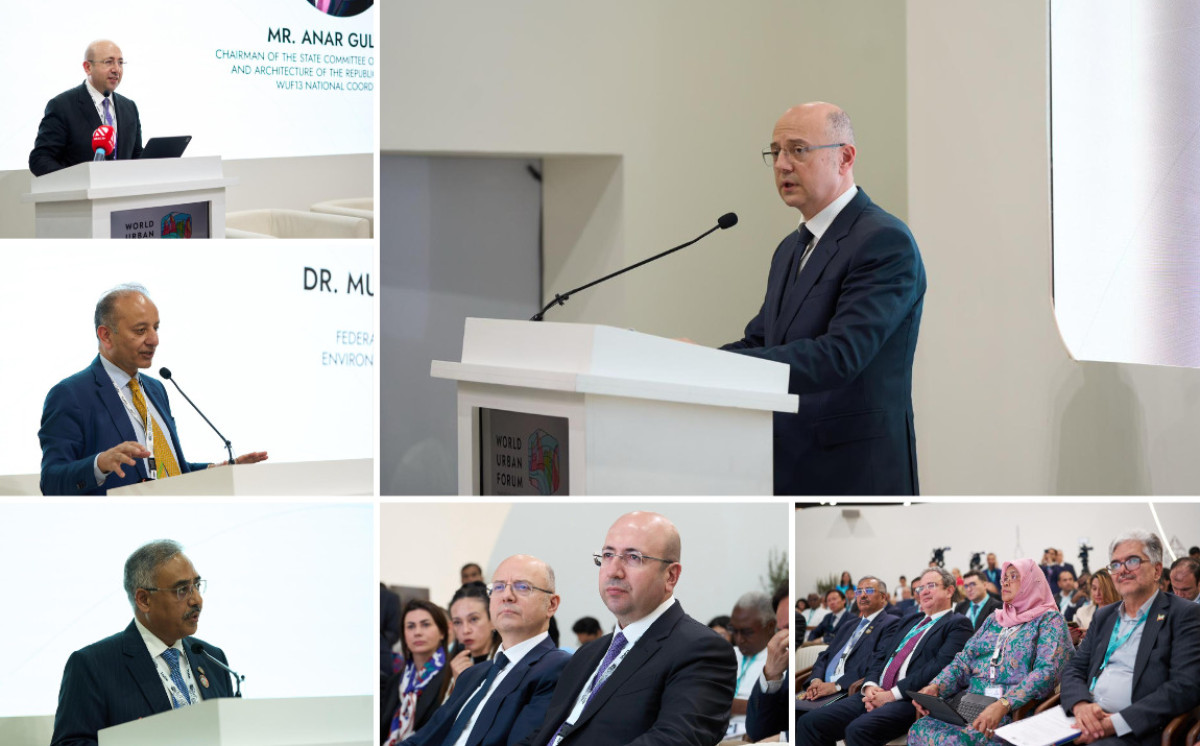
Opening remarks were delivered by Mr. Anar Guliyev, Chairman of the State Committee on Urban Planning and Architecture of the Republic of Azerbaijan and WUF13 National Coordinator; Mr. Parviz Shahbazov, Minister of Energy of the Republic of Azerbaijan; Mr. Sohail Mahmood, Secretary-General of the D-8 Organization for Economic Cooperation; Dr. Musadik Masood Malik, Federal Minister of Climate Change and Environmental Coordination of the Islamic Republic of Pakistan; and Dr. Maimunah Mohd Sharif, PETRONAS Property Advisor and former Executive Director of UN-Habitat.
In their remarks, speakers emphasized the increasing interdependence between urban development, energy systems and climate resilience, stressing that affordable, reliable and sustainable energy has become an essential prerequisite for resilient cities, inclusive growth, adequate housing and long-term socio-economic stability.
The discussions underscored the importance of integrated and forward-looking urban energy policies, including renewable energy deployment, energy-efficient buildings, sustainable mobility systems, resilient urban infrastructure, smart technologies and innovative financing mechanisms to support rapidly growing urban populations across the D-8 region.
Speakers further highlighted that the D-8 region represents nearly 1.25 billion people — approximately 60 percent of the global Muslim population — with a combined economic potential of around USD 5 trillion, positioning the Organization as an increasingly important platform for strengthening South-South cooperation, promoting sustainable development and advancing shared prosperity among developing economies.
Participants also stressed the importance of strengthening cooperation with international organizations, development partners, financial institutions, the private sector, academia and local communities to mobilize investment, encourage innovation as well as accelerate the implementation of climate-responsive and people-centered urban development policies.
Participants further noted the importance of ensuring continuity between D-8 Week 2025, COP29-related initiatives, the objectives of the D-8 Decennial Roadmap (2020–2030), and broader global sustainable development processes, including the implementation of the 2030 Agenda for Sustainable Development, the Paris Agreement and the New Urban Agenda.
The panel discussions featured contributions from high-level representatives of Azerbaijan, Pakistan, Türkiye, Iran, Nigeria, Bangladesh, Malaysia and Indonesia, as well as participating international institutions and organizations, who exchanged views and best practices on integrated urban energy solutions, climate resilience, sustainable urbanization policies and implementation-oriented partnerships.
Particular emphasis was placed on the importance of institutional cooperation, knowledge exchange, technology transfer and the development of regional coordination mechanisms aimed at facilitating practical collaboration among D-8 Member States in the areas of energy transition, sustainable connectivity and climate-resilient urban development.
Against this backdrop, in 2025, Azerbaijan, following its accession to the D-8, presented a number of initiatives aimed at strengthening practical cooperation within the D-8 framework, including proposals to establish the D-8 Energy and Climate Center, the D-8 Transport Excellence Center and the D-8 Media Excellence Center in Baku. These initiatives are intended to contribute to regional cooperation in sustainable energy, transport connectivity, logistics, innovation, climate resilience and information exchange.
The Dialogue concluded with calls for strengthened cooperation and sustained engagement among D-8 Member States and relevant stakeholders to transform discussions into concrete partnerships and practical initiatives fostering resilient, inclusive, energy-efficient and sustainable cities across the D-8 region.






Ən son xəbərləri səhifəmizdən də izləyin